How a Dental Clinic Plans a Smile Makeover Around You
Your smile affects more than photos. At Petrolia Dentistry, many people ask what a smile makeover at a dental clinic actually means, and whether it has to be a huge project.
Most of the time, it doesn't. The plan depends on your goals, your oral health, and the small details you notice every day, so it helps to see how the process works before you decide anything.
What a smile makeover really includes
A smile makeover is not one treatment with one fixed timeline. It is a custom plan that improves how your smile looks and, in many cases, how it works. Some people want brighter teeth. Others need help with worn edges, old dental work, or a missing tooth that changes the whole look of the smile.
That mix matters. Cosmetic care can improve color, shape, and symmetry, while restorative care can rebuild strength and bite support. A makeover works best when both sides are considered. The goal is a smile that looks natural, feels comfortable, and fits your face.
The plan should also respect what already works. If your teeth are healthy and you like their general shape, your dentist may keep changes small. A good makeover improves the smile you have, not one that looks artificial or out of place.
Common treatments that may be part of the plan
One person's plan might be simple. Another might combine a few treatments over several visits.

Teeth whitening helps with stains from coffee, tea, wine, and age. Veneers cover the front of teeth to change color, shape, or small gaps. Cosmetic bonding uses tooth-colored material to repair chips or smooth uneven edges.
Crowns cover teeth that are weak, worn, or heavily filled. Invisalign moves teeth into better positions with clear aligners. If a tooth is missing, your dentist may talk with you about an implant, a bridge, or a denture. Not every patient needs every option, and that's the point.
How dentists match treatments to your goals
A good dentist does more than point out flaws. They look at tooth shape, shade, spacing, wear, gum health, bite, and any missing teeth. Then they ask what you want to change.
Some people want a brighter smile for upcoming photos. Others want less crowding, a smoother front tooth, or to replace a dark old crown. Your plan should match those goals, but it also has to fit your budget and oral health. If one option looks good on paper but doesn't suit your teeth, your dentist should say so and explain why.
How a smile makeover consultation works at a dental clinic
The first visit should feel calm, not rushed. You are not expected to know which treatment you need. Your job is to explain what bothers you and what kind of result feels right. The clinic's job is to listen, examine, and give clear next steps.
What happens during the first exam and conversation
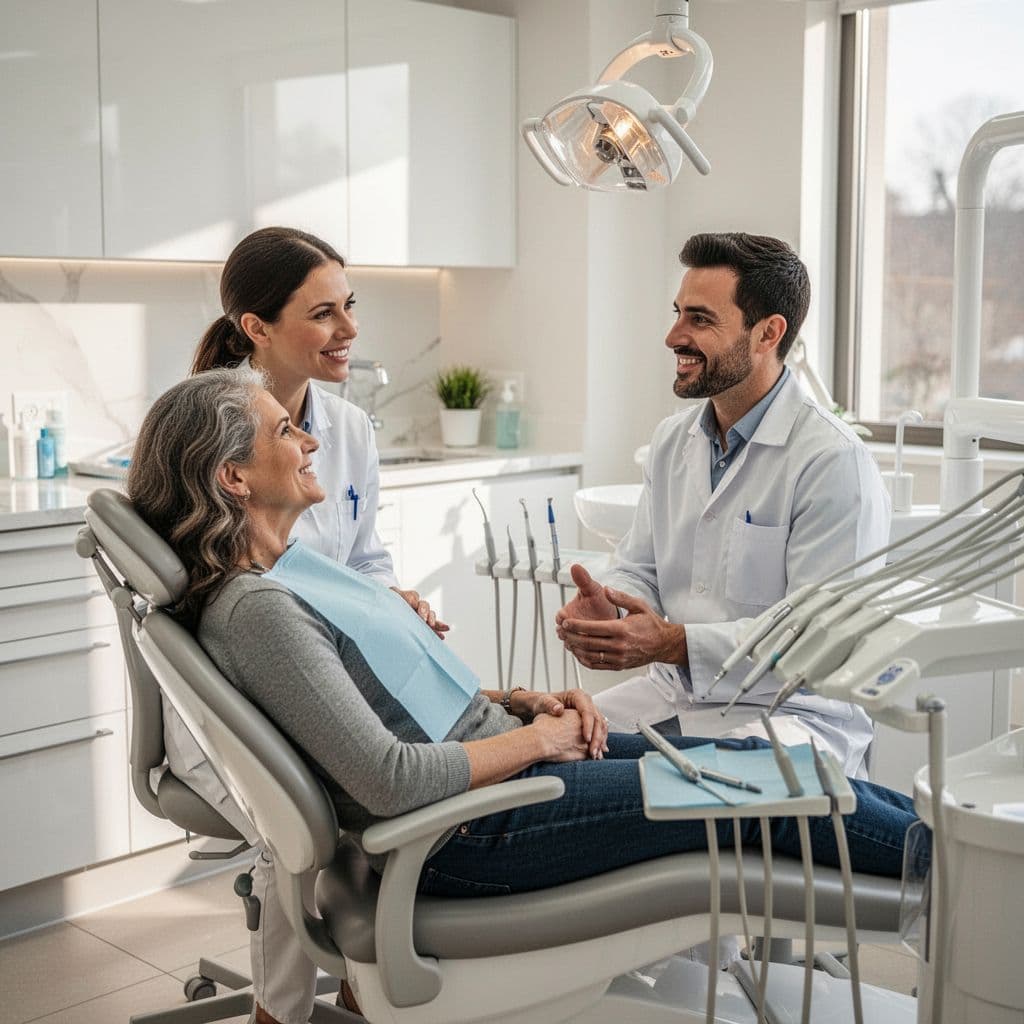
Your dentist will usually start with a standard exam. That may include photos, digital X-rays, or a scan if they need a closer look at your teeth and bite. These records help show details that are easy to miss in a mirror. Intraoral photos can also help you see what the dentist sees.
Just as important, the dentist should ask what you like and dislike about your smile. Maybe one tooth overlaps. Maybe older dental work stands out. They should also review your health history, past dental treatment, and any jaw pain, grinding, or sensitivity. You can ask about timing, numbness, sedation, and how many visits a treatment may take. Good clinics answer questions in plain language, so you leave knowing what needs attention now and what can wait.
Why a custom treatment plan matters
A smile plan does not have to happen all at once. In fact, many of the best results come from staged care. You might start with a cleaning, gum treatment, or replacing a damaged tooth before moving into whitening or veneers.
That sequence is not a delay. It gives your smile a healthy foundation. When gums are healthy and teeth are stable, cosmetic work tends to look better and last longer. It also helps you budget and plan your time.
Some patients choose to pause between stages, and that is fine. A clear roadmap can make a makeover feel manageable, even if it includes several steps.
A good consultation should leave you informed and comfortable, not pressured.
Which smile concerns can be improved with cosmetic dentistry
Most people who visit a clinic for a smile makeover are not chasing perfection. They want their teeth to look cleaner, more even, or less distracting. That can mean fixing one chipped edge, or it can mean rebuilding a smile after years of wear.
Results depend on your starting point. Still, many common concerns respond well to cosmetic and restorative dental care when the plan is realistic. That range is why the first exam matters. Two people may both say, "I don't like my front teeth," while needing very different solutions.
Stains, chips, gaps, and worn-down teeth
Surface stains often respond well to professional whitening. If one front tooth is chipped, bonding can reshape it in a single visit. Small gaps may close with bonding or veneers, depending on the size of the space and the look you want.
Worn teeth need a closer look because wear can change length and bite. For example, a small chip on one side often needs far less treatment than a tooth that is cracked and weak. In mild cases, bonding may restore the edge. When a tooth has lost more structure, a veneer or crown may offer better support. The right choice depends on strength as much as looks.
Crooked teeth, crowding, and uneven spacing
When teeth overlap or twist, whitening alone will not change the overall look. That is where Invisalign or other orthodontic care can help. Moving teeth into better positions often improves the smile before any bonding or veneer work starts.
Straighter teeth can help with daily cleaning, too. Floss can pass more easily, and tight spots trap less plaque. Some patients finish orthodontic care and realize they need less cosmetic work than they first expected.
Missing teeth and older dental work
If a tooth is missing, the smile may look uneven, and the bite may feel off. A makeover plan may include an implant, bridge, or denture, based on your needs and bone support. Replacing a missing tooth can help with chewing, speech, and facial balance.
Older crowns, dark fillings, or mismatched dental work can also pull attention right away. Sometimes the first step is simply reviewing old work and deciding what still fits your bite. In those cases, replacing worn restorations may matter more than whitening nearby teeth. A smile makeover can be cosmetic, but function still matters every step of the way.
How to choose the right clinic for your smile makeover
The clinic matters almost as much as the treatment. A smile makeover usually involves more than one conversation, and sometimes more than one visit. Trust matters because cosmetic care is personal. Because of that, you want a team that feels clear, respectful, and easy to work with.
Experience, technology, and clear communication
Look for a dental office that can handle cosmetic, restorative, and orthodontic care in one place when possible. That makes planning simpler. It also helps when one treatment affects another, such as straightening teeth before placing veneers or crowns.
Modern tools help, too. Digital X-rays, intraoral scans, and 3D imaging can give your dentist a better view of tooth position and bone support. Some clinics also offer CEREC same-day crowns, which may reduce extra trips. You can also ask who will handle each step, and whether your records stay in one chart. Before-and-after examples can help, but honest explanations matter more. A dentist who listens well will also say when a simpler option makes more sense.
Comfort, accessibility, and follow-up care
Comfort matters, especially if dental visits make you tense. A good clinic should offer gentle care, and for some patients, sedation options can help. If you're nervous, ask how the team helps anxious patients settle in. Family-friendly scheduling, wheelchair access, evening hours, and free parking also make follow-up visits easier.
This is where local care helps. Patients in Petrolia, Wyoming, Oil Springs, Enniskillen, and nearby communities often prefer a clinic that is easy to reach because smile makeovers may include check-ins. For many families, flexible appointments and help with direct insurance billing or CDCP support make treatment easier to manage. After treatment, you should get home care tips, guidance on retainers or whitening touch-ups if needed, and a place to call if something feels off. Comfortable care continues after the cosmetic work is done.
A smile makeover can start small
Most smile makeovers start with one honest conversation. The best plans move step by step, with room for cleanings, gum care, alignment, repair, or whitening in the order that makes sense for you.
You do not have to commit to everything on day one. Sometimes the best first step is a consultation and a few honest questions. What matters most is fit. A smile makeover should match your goals, your oral health, and your comfort level, and the right dental clinic will explain each choice without pressure.
If you'd like to talk through your options, the team at Petrolia Dentistry, led by Dr. Michael Hoben and Dr. Rebecca Phillips, welcomes consultations at 430 Albany St, Petrolia, ON N0N 1R0, Canada. You can call (226) 784-8078, email treatment@petroliadentistry.com, or visit https://petroliadentistry.com/ to ask questions or book a visit that works for you.
Click here to learn more.


Comments
Post a Comment