Dental Implant Consultation Near Me: What to Expect
A good consultation gives you answers before any treatment starts. You learn if implants fit your mouth, your health, and your budget. You also get a clearer picture of what comes next, so the process feels less stressful and more manageable.
Why a dental implant consultation is the first step toward a better smile
A missing tooth can seem small at first. Then chewing gets awkward, nearby teeth start shifting, or a denture rubs the same sore spot every day. Over time, the jawbone in that area can shrink because it no longer supports a tooth root. That's one reason dentists take tooth loss seriously.
An implant consultation is where those problems get sorted out. The visit is not about pressure. It's about finding out what's happening in your mouth and what options make sense for you.
A good implant consultation should feel like a conversation, not a sales pitch.
That first visit can also bring relief. You stop guessing. Instead, you get a plan based on your teeth, gums, bone support, and goals.
Who is usually a good candidate for dental implants?
Many people assume implants are only for major dental cases. That's not true. You may be a fit if you're missing one tooth, several teeth, or if your dentures feel loose and frustrating.
Your dentist will also look at the health of your gums and jawbone. General health matters too. Some medical conditions, smoking, and past dental issues can affect healing, so honesty helps your dentist guide you well.
Even if you're not ready for implants today, the consultation still helps. You may need gum care first, or you may need a bone graft before implant placement. Getting that information early gives you more control over the next step.
What makes implants different from bridges and dentures?
The biggest difference is where the support comes from. An implant sits in the jawbone, so it acts more like a tooth root. A bridge usually depends on the teeth beside the gap. A denture rests on the gums and is removable.
This quick comparison makes the differences easier to see:
| Option | How it stays in place | What it relies on | Daily feel |
|---|---|---|---|
| Implant | Placed in the jawbone | Bone and gum support | Stable, fixed |
| Bridge | Attached to nearby teeth | Adjacent teeth | Fixed, but depends on other teeth |
| Denture | Sits on the gums | Gum fit and suction | Removable, may shift |
Because of that support, implants often feel more secure when you eat or speak. Still, bridges and dentures can be the right choice in some cases. Your dentist may suggest one of those if your health, bone level, timeline, or budget makes more sense for a different route.
What usually happens during the consultation
Knowing what to expect makes the appointment easier. Most implant consultations follow a simple path. First, you talk. Then the dentist examines your mouth, reviews images, and explains your options.
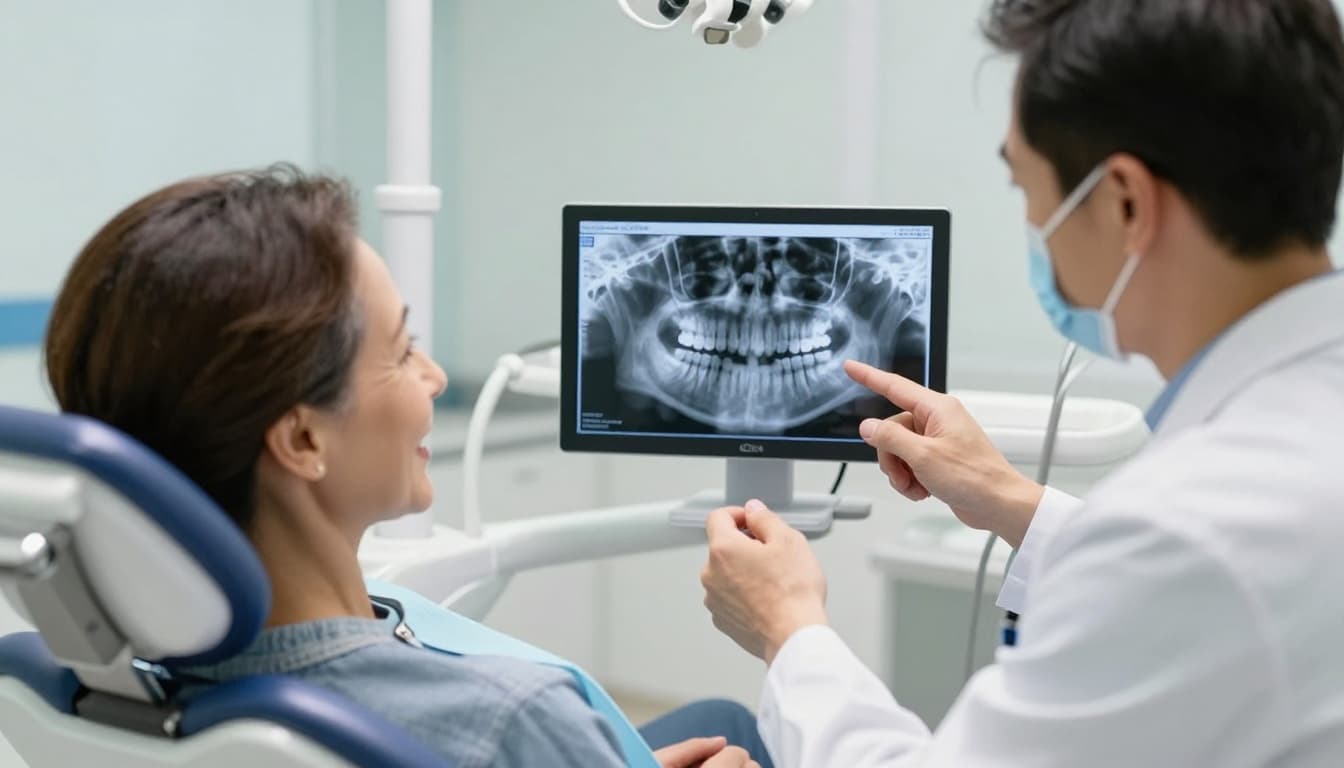
At many offices, this visit feels more practical than dramatic. You're gathering facts. Your dentist is checking what support is there, what issues need care first, and what treatment path gives you the best result.
The questions your dentist will ask about your health and goals
Expect questions about your medical history, medications, allergies, and smoking habits. Your dentist may also ask about past crowns, root canals, dentures, or failed dental work. If you've had pain, swelling, or trouble chewing, say so.
Your goals matter too. Some people want to replace one front tooth. Others want better denture stability. Some want to chew steak again without thinking about it. Those details help shape the plan.
Clear answers make treatment safer. They also help your dentist avoid surprises later. If you feel nervous, mention that as well. Anxiety is common, and it should be part of the conversation.
How exams and imaging help map out your treatment
An implant needs enough bone in the right place. That's why imaging matters so much. Digital X-rays can show tooth roots, bone levels, and problem spots. A 3D scan gives an even better view of bone shape, gum support, and the location of nearby nerves or sinuses.
That extra detail helps your dentist place implants more accurately. It can also show if you need bone grafting before surgery. In other words, imaging turns guesswork into a map.
At Petrolia Dentistry, implant planning is supported by in-house dental CT imaging and digital X-rays. That matters because the more clearly your dentist can see the area, the more precise the plan can be.
How the dentist explains your options and next steps
After the exam, your dentist should walk you through the findings in plain language. You might hear that you need one implant, two implants, or an implant-supported denture. You may also learn that a bone graft or tooth removal comes first.
Timelines vary. Some cases move quickly. Others need healing time between steps. Your dentist should explain what happens first, how long it may take, and when the final crown or denture is placed.
This is also the best time to ask questions. Ask how the area will heal, what discomfort is normal, and how many visits you may need. A solid consultation leaves you with a plan, not confusion.
Questions worth asking before you choose a provider
When you're comparing local options, don't focus only on the word "implant." Focus on the whole experience. If you're searching for a nearby dental implant consultation, you want a dentist who explains things clearly, plans carefully, and respects your budget.
Ask about experience, technology, and implant planning
Start with simple questions. How often does the office handle implant cases? Do they use digital X-rays or 3D scans? Is planning done in-house, or are parts of the process sent elsewhere?
Those answers tell you a lot. Experience helps your dentist spot issues early. Good imaging helps them plan safely. In-house planning can make communication easier because fewer details get lost between offices.
At Petrolia Dentistry, patients can ask about implant planning, dental CT imaging, and restorative care under one roof. That kind of setup can save time and make the process feel more organized.
Find out what the full cost may include
Implant pricing can be confusing if you only hear one number. A clear estimate should explain what is included. That might mean the consultation, imaging, implant placement, the crown, follow-up visits, and any added steps such as bone grafting.
Ask for the full picture, not the headline price. A lower quote can look appealing at first, but it may leave out important parts of treatment. Clear fees help you plan with less stress.
Check whether financing, insurance, or payment plans are available
Cost matters, and most patients want that conversation early. Ask how the office handles insurance, direct billing, and payment plans. If you're eligible for programs such as CDCP, ask what may apply and what may not. Implant coverage often varies.
A good office won't make you feel awkward for asking. Dental care is easier to move forward with when the financial side is clear.
How to know if the consultation feels like the right fit
You can learn a lot in one appointment. The treatment plan matters, but so does the way the office treats you. If you leave feeling rushed, confused, or pressured, that's useful information.
By contrast, the right consultation usually feels calm and clear. You understand your choices. You know the next step. Most of all, you feel heard.
Signs the team listens and explains things clearly
Pay attention to the small things. Does the dentist answer your actual question, or do they jump past it? Do they explain the pros and limits of each option in plain words? Do they check that you understand before moving on?
That kind of communication builds trust. It also helps you make a better decision because you know what you're agreeing to.
At Petrolia Dentistry, patients meet a team that has served the community since 2011. Dr. Michael Hoben, Dr. Rebecca Phillips, and the staff focus on clear explanations, patient-first care, and treatment plans built around real needs.
What a comfortable, low-stress visit should feel like
A dental visit doesn't need to feel tense from the moment you walk in. The office should feel welcoming. The front desk should be kind. If you're anxious, the team should respond with patience, not impatience.
Comfort also shows up in practical ways. Gentle care, sedation options for nervous patients, clear timing, and a clean, organized office all make a difference. Petrolia Dentistry offers those supports at 430 Albany St in Petrolia, with free parking and hours that fit many work schedules, including Thursday evening availability.

Conclusion
The search for a dental implant consultation near you usually starts with one simple goal: you want your mouth to feel normal again. A consultation is the best place to find out if implants are right for you, what the process may involve, and what kind of result you can expect.
Local care matters because follow-up, comfort, and trust matter. If you're in Petrolia or nearby, Petrolia Dentistry welcomes new patients and offers implant planning with modern imaging, clear treatment discussions, and payment support options.
If you're ready to chew more comfortably and smile with more confidence, call Petrolia Dentistry at (226) 784-8078 or visit the office at 430 Albany St, Petrolia, ON N0N 1R0 to book your consultation.


Comments
Post a Comment